


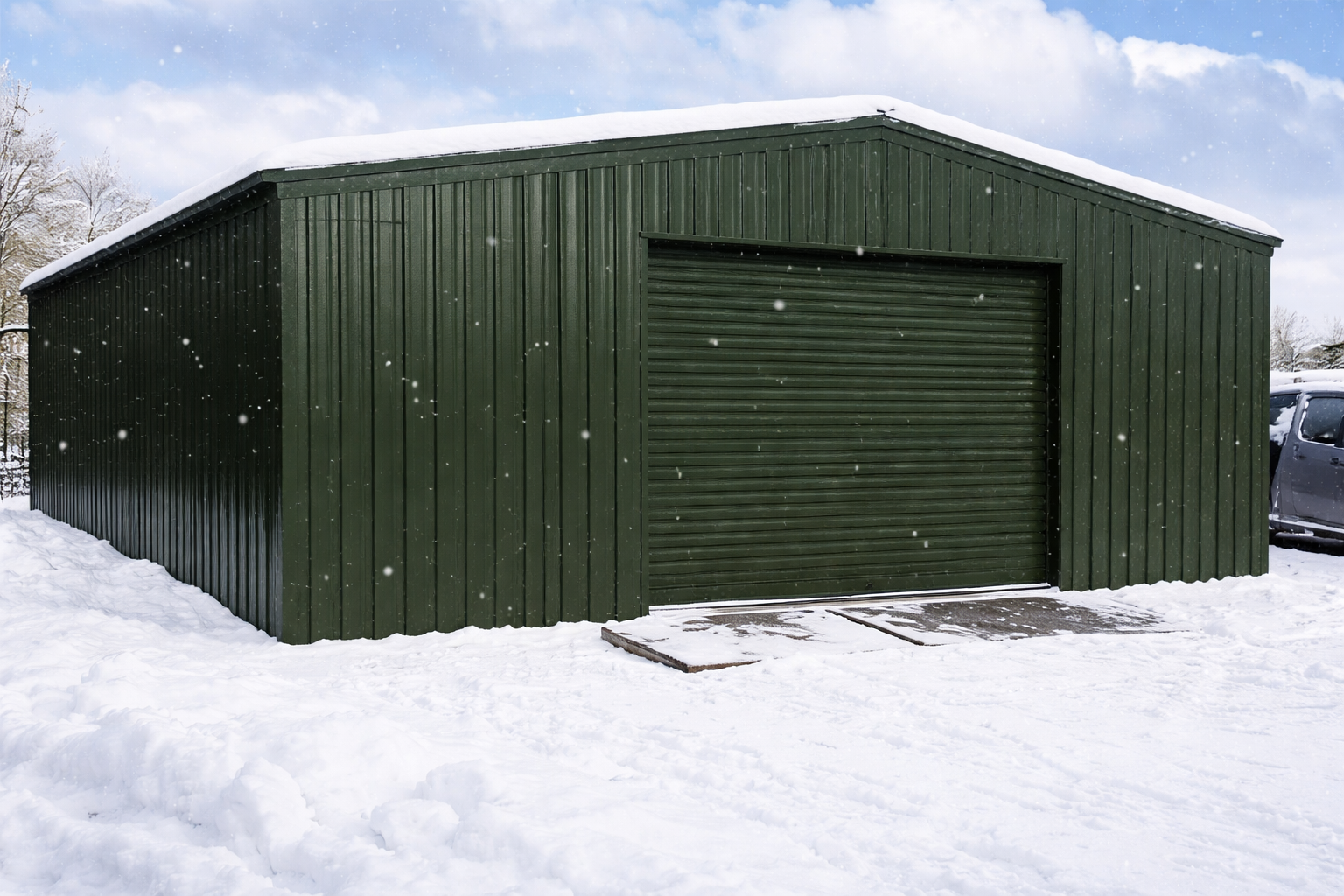
Winter vehicle storage needs more than a roof and a lock. A custom steel building can protect a classic car, luxury vehicle or everyday runabout from wind-driven rain, frost and debris, but its performance depends on the whole specification. Door seals, drainage, ventilation and the condition of the vehicle going inside all matter. For motorhomes and campervans, there is also the risk of trapped moisture in upholstery, cupboards and onboard water systems.
The aim is a secure, weather-resistant space that stays reasonably dry, provides safe access and makes routine checks straightforward throughout winter.
What winter protection actually requires
Keeping rain off the paintwork is only part of the job. A vehicle driven into storage wet brings moisture with it, while damp ground and poorly detailed doors can introduce more. When humid air meets cold metal, condensation can form on cladding, tools and vehicle surfaces.
A useful specification therefore addresses four connected issues: rain getting in, ground moisture rising, condensation forming and damp air lingering. Insulation alone does not solve all four.
Choose the level of protection around the vehicle and how you use it. An everyday car needs convenient access and somewhere for wet tyres to drain. A classic car stored for months needs a stable moisture-management plan. A luxury vehicle may also justify stronger security arrangements agreed with its insurer.
Size your custom steel building around the vehicle
Start with the vehicle’s actual dimensions, not its brochure category. Measure mirrors, roof equipment, rear-mounted carriers and any accessories that remain fitted during storage. For motorhome and campervan garages, check the highest fixed point, including aerials or rooftop air-conditioning units.
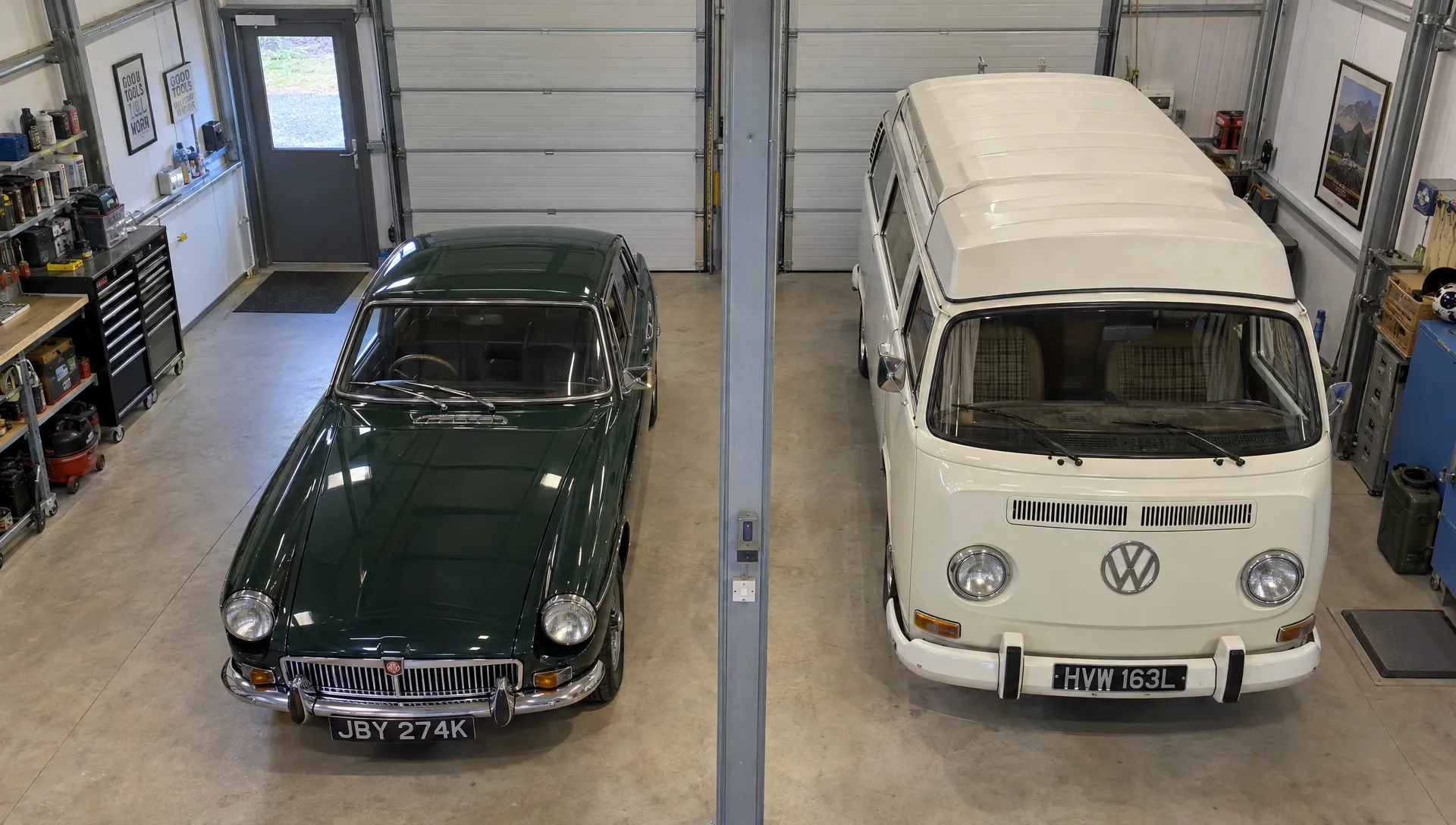
Then allow space to move around the vehicle, open doors and reach service points without scraping bodywork against shelving.
| Measurement or check | What to allow for |
|---|---|
| Clear door width | Mirrors, approach angle and comfortable manoeuvring space |
| Clear door height | Roof equipment and any door mechanism below the roof structure |
| Internal length | Tow bars, bike racks, rear access and storage equipment |
| Usable internal width | Opening vehicle doors and walking alongside safely |
| Approach space | Turning, reversing and avoiding steep changes in gradient |
Clear opening dimensions matter more than nominal door sizes. Ask for the usable opening once tracks, frames and operating gear are installed.
Plan around the largest vehicle you realistically expect to own, particularly if a campervan upgrade is likely. Additional floor area may also accommodate a workbench, but keep maintenance space separate from the route needed to get the vehicle out.
Match the structure, cladding and base to the site
A custom steel building should be specified for its location, including relevant wind and snow loads. An exposed coastal plot presents different challenges from a sheltered inland garden.
Cold rolled steel buildings can suit vehicle storage, provided the complete system is engineered for the proposed dimensions, openings and conditions. The frame type does not remove the need for suitable foundations and correct installation.
Gutters and downpipes must discharge somewhere suitable, not beside the entrance or against the foundation.
The slab and surrounding ground deserve equal attention. Ask the foundation designer about load capacity, a suitable damp-proof membrane and measures to prevent surface water entering. External falls should direct runoff away from the building without creating an awkward approach for low vehicles.
Avoid assuming that an existing patio or domestic garage slab is suitable. Its thickness, reinforcement and ground support may be unknown, and building anchors need a properly designed connection.
Premier Steel buildings recommend a 150mm slab with deeper foundations around the edges
Manage condensation, not just temperature
For a custom steel building used through winter, decide how moisture will be controlled before choosing the lining. A basic uninsulated enclosure can keep rain off while still experiencing condensation on cold internal surfaces.
Insulated storage buildings reduce rapid surface-temperature changes, but insulation needs to cover doors as well and other openings. Gaps can leave cold spots, and poorly designed linings can conceal moisture rather than prevent it.
Ask the supplier to explain how insulation, ventilation and any vapour-control provisions work together. Anti-condensation (anit drip coatings on single skin cladding) backing on roof sheets can help manage temporary surface moisture, but it is not insulation and has a finite moisture-holding capacity. It needs conditions that allow it to dry.
Choose a workable drying strategy
Ventilation can help remove moisture when outside conditions are suitable. A dehumidifier may offer more controlled drying in a reasonably enclosed space, but it must suit the operating temperature and have a safe condensate-disposal arrangement. Permanently open vents can reduce its effectiveness by continually admitting outside air.
Heating alone does not remove water from the building. Nor should doors and vents simply be sealed without considering how damp air will escape.
A humidity monitor helps you spot persistent damp conditions and assess whether your approach is working. Check it after wet vehicles arrive and during colder weather, not just on the day the building is handed over.
Specify doors, security and safe services
The entrance is often the most heavily used part of a custom steel building, so its weather resistance and operation deserve close attention. Ask about how the door opens if electrical power fails.
A separate pedestrian door can make winter inspections easier without opening the main vehicle entrance. Position it so that a parked car or motorhome cannot block it, and make sure occupants can leave safely.
For valuable vehicles, discuss the proposed building with the insurer before committing. Confirm any requirements for locks, alarms, vehicle immobilisers and the declared storage address. Metal garages are not automatically secure simply because their cladding is steel; doors, hinges, fixings and accessible windows all need consideration.
Lighting should make it easy to inspect tyres, spot leaks and move safely around the vehicle. If you need sockets for a battery maintainer, dehumidifier or security equipment, have a qualified electrician design the supply and protective measures.
Keep charging leads clear of tyres and walkways. Any battery charging arrangement must follow the equipment and vehicle manufacturers’ instructions, including ventilation requirements. Do not idle engines or use barbecues or unflued fuel-burning heaters inside the building.
Winterise the vehicle before putting it away
Even a well-designed custom steel building cannot compensate for storing a vehicle wet, dirty or with unresolved leaks. Prepare the vehicle first, then make periodic checks part of the storage routine.
Classic, luxury and everyday cars
Wash off road salt and dirt, then allow the vehicle to dry thoroughly before prolonged storage. Check fluids, tyre pressures and any signs of water ingress. Follow the manufacturer’s advice on fuel, battery maintenance and longer-term parking rather than applying a universal storage routine.
An occasional engine start is not a substitute for a proper maintenance plan. Arrange any running or driving in accordance with professional guidance and never leave an engine idling inside the garage.
Use a clean, suitable vehicle cover only when the bodywork is dry. A cover should not be used to hide an unresolved condensation problem.
Motorhomes and campervans
Follow the manufacturer’s winterisation procedure for fresh-water tanks, waste systems, pipes and appliances. Frost protection varies between vehicles, so do not assume that parking under cover prevents freezing.
Clean and dry the interior, checking cupboards, mattresses and storage lockers for moisture. Remove touring food supplies, and put perishables into suitable refrigeration or freezing rather than leaving them in a switched-off onboard fridge.
Deal with roof or window leaks before storage. Check the vehicle periodically for damp, pests and battery condition, especially after severe weather.
Compare kit buildings with installed options
Kit steel buildings can appeal to owners who want control over assembly, particularly when combining vehicle storage with self build workshops. Compare the complete project including base slab, drainage and internal works rather than the just he supply only price.
Before choosing supply-only delivery, contact local groundworks teams to build your slab for you, they can check the site for you, for obstructions (trees, cables etc).
Our guide to choosing self-build metal sheds for workshops explores the workshop side in more detail. For winter vehicle storage, give additional attention to weathertightness, door installation and moisture control.
Whichever route you choose, make sure the custom steel building quotation identifies who supplies and installs each part. A package described as a kit may not include foundations, insulation, rainwater goods or electrical work. An installation price may also depend on access, ground preparation and the availability of lifting equipment.
Check planning and building regulations early
Some domestic outbuildings in England can fall within permitted development, subject to conditions and limits. That does not mean every garage or large garden building can proceed without an application. Size, height, position, intended use and restrictions affecting the property all matter.
The Planning Portal’s guidance on outbuilding planning permission provides a starting point for England. Requirements differ across the UK, so confirm the position with the relevant local planning authority before ordering.
Building regulations are separate from planning permission. Structural work, fire safety and electrical installations may require approval or certification even where planning permission is unnecessary. A building used for commercial vehicle storage or customer-accessed self storage may raise different issues from a private domestic garage.
Confirm the intended use accurately, including any workshop activity, heating or future changes you are already considering.
Request a quote that covers the finished storage space
A useful custom steel building enquiry describes the site and the sizes you require. Send dimensions and photographs if necessary, including the delivery route and any overhead restrictions.
Include the following information so suppliers can price a comparable scope:
Vehicles and access: Vehicle dimensions, number of spaces, clear door openings and room for manoeuvring.
Site conditions: Location, exposure, available footprint, ground information and existing drainage.
Building specification: Frame, cladding, insulation, ventilation, doors, windows and finishes.
Project responsibilities: Surveys, engineering, foundations, delivery, unloading, erection and waste removal.
Costs and exclusions: VAT, electrical work, security equipment, permissions and anything left for you to arrange.
Ask how changes to door sizes or insulation affect the price before accepting a quotation. The cheapest shell may not be the lowest-cost route to a dry, usable garage.
When assessing proposals, our guide to choosing a metal building company explains how to compare supplier responsibilities and overall project scope.
Frequently asked questions
Does a steel garage need insulation for winter vehicle storage? Not always. An uninsulated building may provide suitable weather protection for some uses, but condensation still needs managing. Insulation becomes more valuable when reducing cold internal surfaces or creating a controlled storage environment, provided ventilation and moisture removal are addressed too.
How much does a custom steel building cost? The price depends on dimensions, site location wind and snow loads, doors, cladding, insulation and the delivery. Foundations and groundworks can cost as much as the building kit. Request an itemised quotation from each contractor for each stage, rather than comparing supply only vs complete turnkey quotes.
Is home storage better than rented self storage? Home storage offers convenient access and control over the environment. Rented storage avoids a building project, but you should check vehicle acceptance, access arrangements, security, moisture conditions and insurance requirements. Compare the whole seasonal cost and the protection provided.
Can an electric vehicle stay in a steel garage over winter? Yes, provided the space and any charging installation are suitable. Follow the vehicle manufacturer’s long-term storage instructions, including battery charge guidance. Do not assume advice for a petrol classic also applies to an electric vehicle.
Plan your winter vehicle storage
Premier Steel Buildings supplies bespoke garages, workshops and other steel buildings across the UK, with options for doors, windows and building colours. Start with your vehicle measurements, site details and winter storage requirements, then use the online enquiry form to request a free quote from Premier Steel Buildings.
Ask the quotation to distinguish the building package from foundations, installation and services so you can plan the complete storage space before work begins.